
In the ever-evolving landscape of digital marketing, understanding the fundamentals of search engine optimization (SEO) is very important for any online journey.
While many beginners focus intently on their website’s internal structure and content, a truly robust SEO strategy extends far beyond your own domain.
This guide clarifies the critical external elements that signal authority and relevance to search engines, providing a clear pathway for beginners to build a formidable online presence.
Table of Contents
What Is Off-Page SEO?
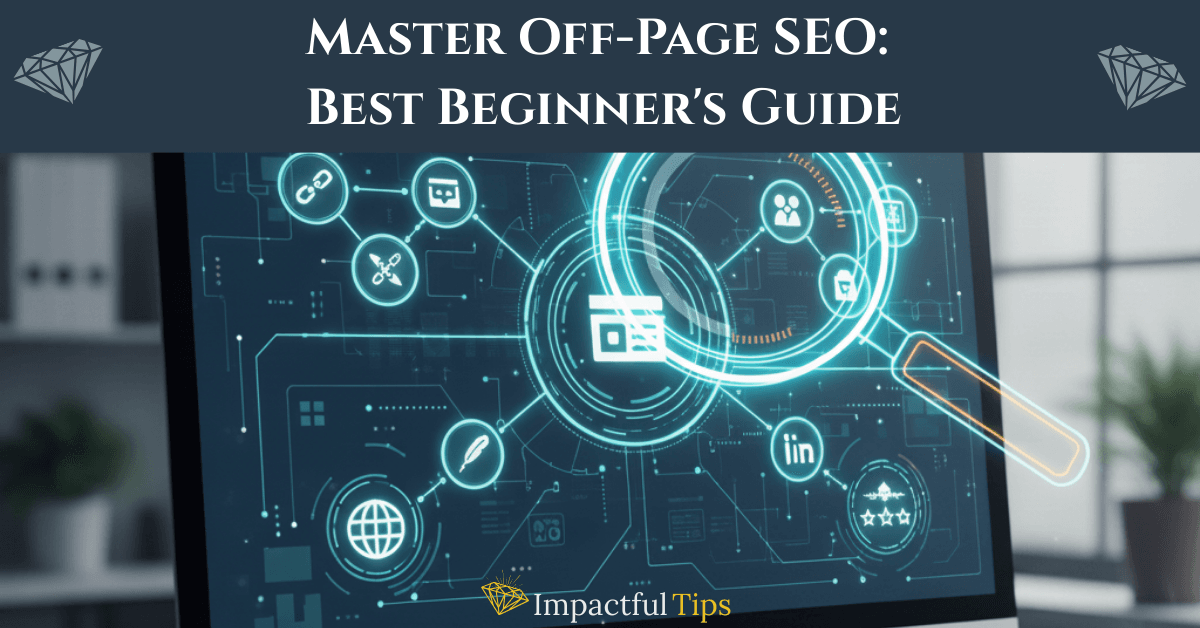
What is off-page seo? It is the combination of all actions taken outside of your own website to influence your search engine rankings and online presence.
Think of it as your site’s reputation management within the vast digital ecosystem. These external signals are paramount because they indicate to search engines like Google that other credible entities vouch for your content’s quality and authority.
Unlike technical tweaks you control directly, off-page seo optimization involves cultivating relationships and earning recognition. It is the digital word-of-mouth that algorithms interpret as a powerful endorsement.
Off-Page SEO and On-Page SEO: A Crucial Relationship
To truly grasp the mechanics of search visibility, one must understand the distinct roles of SEO on-page and off-page. They are two sides of the same coin, each indispensable. On-page SEO involves the elements you fully control on your website: keyword-rich content, meta tags, site structure, and internal linking. It is about making your site comprehensible and valuable to both users and crawlers. Here are our complete guide to On-Page SEO!
Off-page seo, conversely, is about external validation. It answers a critical question for search engines: “Do others, particularly established authorities, find this content valuable enough to link to or discuss?” You can have a perfectly optimized site, but without external signals, its potential visibility is severely capped. The most successful strategies seamlessly integrate off-page on-page seo efforts together, creating a virtuous cycle where great on-page content attracts off-page signals, which in turn drive more traffic and opportunities for further content creation and links.
Off-Page SEO: Beyond the Basics
The term “off the page SEO” is often used interchangeably with off-page SEO, but it can imply a broader perspective.
It encompasses not just traditional link building but the entire spectrum of your brand’s digital footprint. This includes mentions on social media platforms, brand sentiment in reviews and forums, and your overall digital reputation. This holistic view is essential.
Modern off-page seo strategies consider how every external interaction, from a social share to a local directory listing, contributes to a composite picture of your brand’s credibility and prominence.
Foundational Off-Page SEO Techniques
Before embarking on extensive outreach, ensure your website’s foundation is solid. A slow or insecure site will undermine your efforts, as few reputable publishers will link to a poor user experience. Investing in a reliable web host like Hostinger or Bluehost, and also using a CDN provider like Cloudflare can dramatically improve site speed and uptime. Furthermore, a fast, lightweight theme like Blocksy paired with a powerful caching plugin such as LiteSpeed Cache (for LiteSpeed servers) creates the blistering-fast loading times that both visitors and search engines reward.
Now you can focus on your journey with proven, white-hat off-page seo methods. For beginners, the key is to start with sustainable activities that build genuine authority.
A core component of any strategy is off-page seo link building. This is the art and science of earning hyperlinks from other websites to your own. The quality of these links is far more important than the quantity. A single link from a highly respected, authoritative site in your industry is infinitely more valuable than dozens of links from low-quality, irrelevant directories. Earning these links typically involves creating content that others naturally want to reference, a practice known as “earning editorial links.”
Other powerful off-page seo optimization techniques include leveraging social media platforms to amplify your content and engage with influencers, ensuring your business is accurately listed in relevant online directories, and actively managing your Google Business Profile for local search dominance. Each of these off-page seo activities serves as a signal of your brand’s legitimacy and engagement.
Your Actionable Off-Page SEO Checklist
A structured approach prevents overwhelm. Use this off-page seo checklist to guide your initial efforts:
- Claim and fully optimize your Google Business Profile listing with accurate NAP (Name, Address, Phone number) data, photos, and categories.
- Identify and submit your site to a select few high-quality, industry-relevant directories.
- Develop a content strategy focused on creating “link-worthy” assets like original research, definitive guides, or powerful tools.
- Begin a disciplined outreach program to connect with bloggers and journalists in your niche.
- Establish active profiles on key social media platforms and engage consistently with your audience.
- Monitor your brand mentions using tools like Google Alerts to find unlinked references and request a link.
- Analyze your competitors’ backlink profiles to identify potential opportunities for your own site.
The Key Off-Page SEO Factors Search Engines Value
Search algorithms are complex, but they prioritize several core off-page seo factors.
The most significant is the quality and relevance of backlinks. A link from a top-tier news site holds immense weight because it is a strong vote of confidence.
The anchor text—the clickable words in a hyperlink—also provides context about the linked page’s content. Furthermore, search engines assess the overall trustworthiness of the domains linking to you.
A diverse backlink profile from a variety of reputable sources is a powerful indicator of a genuine, authoritative site. Social signals, while not a direct ranking factor, contribute to content visibility and amplification, indirectly influencing your ability to earn links.
Off-Page SEO Optimization
Off-page seo optimization is the continuous process of refining and enhancing your external signals to maximize their impact on search rankings.
It moves beyond mere acquisition to a strategic cultivation of digital influence. This involves meticulously analyzing the quality of your backlink profile, pruning toxic links through disavow tools, and strategically pursuing links from domains with high Domain Authority.
True optimization means aligning every external effort—from guest post placements to unlinked brand mention reclamation—with a data-driven plan. It is a deliberate calibration of your website’s standing within the wider web, ensuring each action contributes to a stronger, more authoritative online presence.
This systematic approach is what separates a scattered effort from a powerful, results-driven strategy.
Off-Page SEO Types
Understanding the various off-page seo types is crucial for deploying a diversified and resilient strategy. These methodologies can be broadly categorized to clarify their intent and execution.
One primary type is relationship-based link building, which involves garnering links through digital public relations, influencer collaborations, and guest posting on reputable industry blogs.
Another category is content-based link earning, where creating exceptional resources, original research, or interactive tools naturally attracts editorial links. Furthermore, citation-based building encompasses the creation of consistent business listings in local directories and industry-specific hubs.
A modern type also includes brand-building activities like social media engagement and earning positive reviews, which amplify visibility and foster organic mentions. A sophisticated strategy intentionally incorporates multiple types to build a natural and robust backlink profile.
Conducting a Simple Off-Page SEO Audit
You cannot improve what you do not measure.
A basic off-page seo audit is crucial for understanding your starting point and tracking progress. Begin by using a robust tool like Moz’s Link Explorer (a favorite among professionals for off-page seo moz analyses) or a similar competitor analysis platform like Ahrefs or Semrush.
These tools provide the critical data needed to audit your backlink profile effectively.. These tools allow you to analyze your backlink profile, examining who links to you, the quality of those linking domains, and the anchor text used.
You can also use them to spy on your competitors’ strategies, revealing which off-page seo types of links are working for them. This intelligence is invaluable for refining your own approach.
Off-Page SEO vs. On-Page SEO: The Final Verdict
The debate of off-page seo vs on-page seo is a false contradiction. They are not in competition; they are collaborative forces.
A simple analogy: if on-page SEO is building a fantastic, well-stocked store, then off-page SEO is the marketing, public relations, and word-of-mouth that drives customers to its door.
You need both. The store must be inviting (on-page), but people must also know it exists and trust it enough to visit (off-page).
Your content must be optimized for keywords (on-page), but it also requires external authority (off-page) to rank highly for those very terms. Here’s our complete guide to On-Page SEO!
How to Do Off-Page SEO: A Step-by-Step Guide for Beginners
For those wondering exactly how to do off-page seo, here is a simplified, actionable step-by-step plan:
- Set Up Monitoring: Create Google Alerts for your brand name and key executives to track mentions.
- Claim Your Profiles: Secure your business profiles on Google, major social platforms, and key industry directories.
- Create a Masterpiece: Focus your energy on creating one truly outstanding piece of content that provides unique value. Utilize a versatile page builder like Elementor to design a visually stunning content experience and ensure your SEO fundamentals are covered with a powerful plugin like RankMath.
- Identify Targets: Research bloggers, journalists, and influencers in your field who might be interested in your content.
- Execute Outreach: Craft personalized emails to your targets, introducing your content and explaining why it would be valuable to their audience.
- Build Relationships: Focus on building long-term connections rather than asking for a link in your first email.
- Analyze and Iterate: Use audit tools to see what’s working, learn from your successes and failures, and refine your strategy.
For businesses that lack the time or expertise, partnering with a specialized off-page seo agency can provide the focused effort and experience needed to accelerate results. These agencies have established relationships and proven processes for executing effective off-page seo strategies.
Mastering off-page seo for beginners is not about quick tricks; it is a long-term commitment to building your brand’s digital authority. By consistently applying these techniques, you lay a foundation for sustainable organic growth that will pay dividends for years to come.
Building Authority, One Link at a Time
The journey of mastering off-page SEO is not a frantic sprint for backlinks; it is a deliberate marathon toward building undeniable digital authority. The techniques outlined here—from the foundational power of a optimized Google Business Profile to the strategic art of earning editorial links—provide a robust blueprint for beginners. Remember, these efforts are not isolated tasks. They are the critical external complement to your on-page work, together forming an unbreakable chain of search engine trust.
True success lies in consistency. View each piece of outreach not as a transaction, but as the seed of a future relationship. See every content asset as a long-term investment in your site’s allure. By patiently and ethically implementing these off-page seo strategies, you are not just chasing algorithms; you are building a recognizable brand that audiences and search engines alike will value and reward for years to come. Now, with this knowledge, your work to expand your digital footprint begins.